

For this year’s contest, OPN received 49 stunning entries. We thank the panel of judges who provided insight on those images and helped select the winners: Alvaro Casas Bedoya, Mihaela Dinu, Anderson Gomes, Antigone Marino, Anne Matsuura, Anca Sala and Susanna Thon.
You can see all of this year’s contest entries online at optica-opn.org/contest/2025.
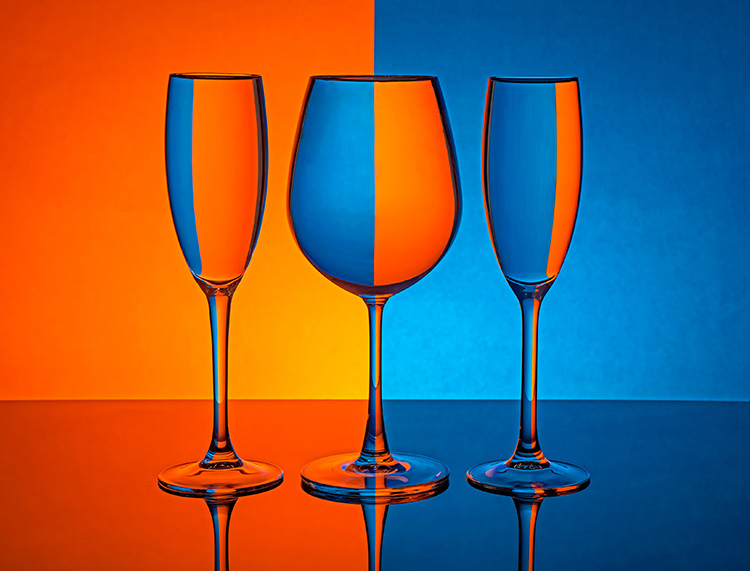
FIRST PLACE
Through creative use of artificial light, three water-filled glasses placed on a reflective surface against a dual-color background beautifully demonstrate optical principles like reflection and refraction—transforming simple objects into an artistic interplay of light, color and geometry.
—Kishore Das, Kolkata, India
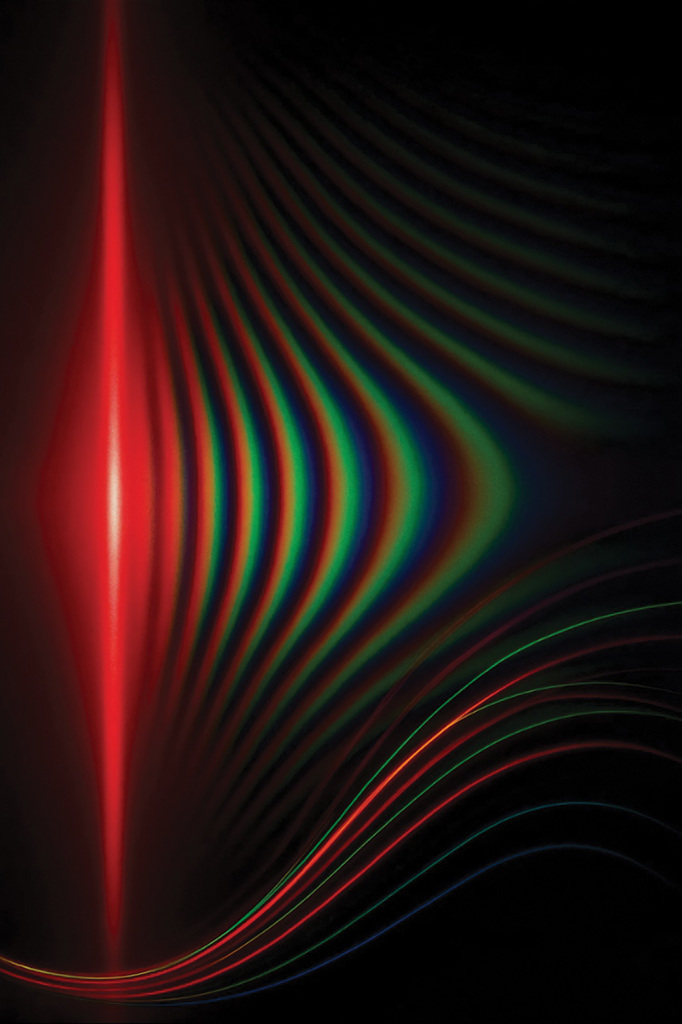
SECOND PLACE
A diffraction pattern produced by a laser beam interacting with the microscopic grooves of an optical disc (CD). The resulting interference creates vivid, rainbow-like spectral rings. The photograph was digitally enhanced for clarity and color balance, highlighting the physics of light scattering and wavelength separation.
—Seema Mor, Sanskaram University Optica Student Chapter, Jhajjar, India; under the guidance of Dr. Babita Hooda, Sanskaram University, India
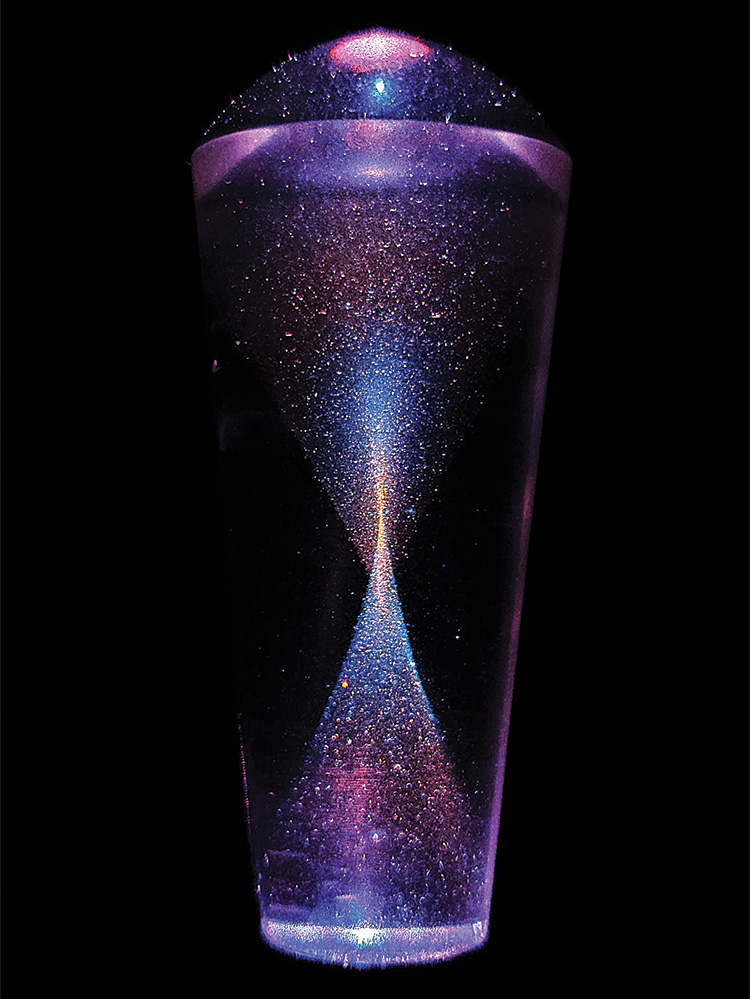
THIRD PLACE
This photo presents a tangible manifestation of a 3D caustic surface. This effect was achieved by collimating light rays from lasers of two different colors and directing them onto an optical device that was fabricated using additive manufacturing, featuring an interface with an elliptical profile specifically designed for this purpose.
—Osvaldo Ponce-Hernández and Maximino Avendaño-Alejo, Universidad Nacional Autónoma de México, Mexico City, Mexico
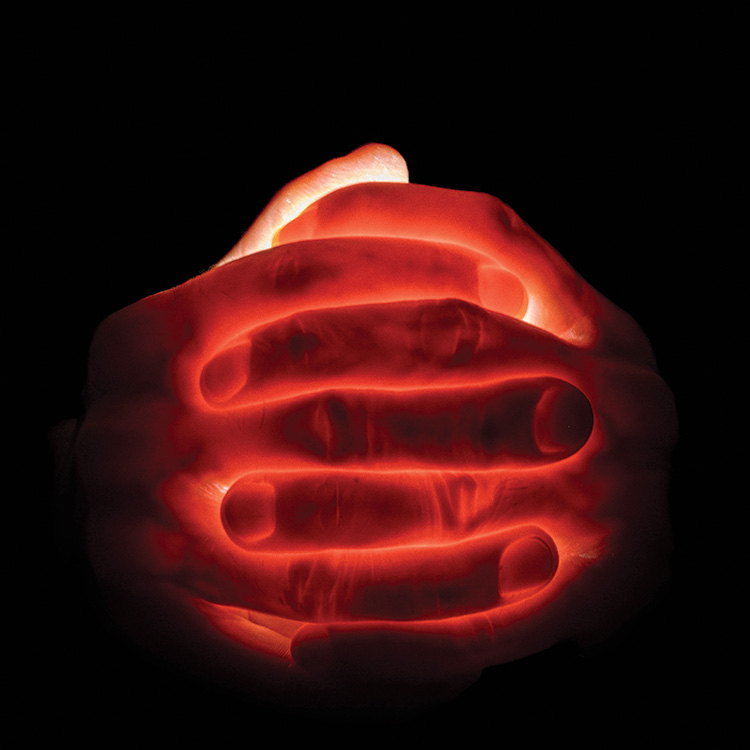
HONORABLE MENTION
Hands illuminated with a white LED lamp appear semi-transparent. Lower frequencies of light pass through the tissues of the hand, while higher frequencies are blocked, generating the glowing red color of the skin.
—Andrea Aiello, Max Planck Institute for the Science of Light, Erlangen, Germany
HONORABLE MENTION
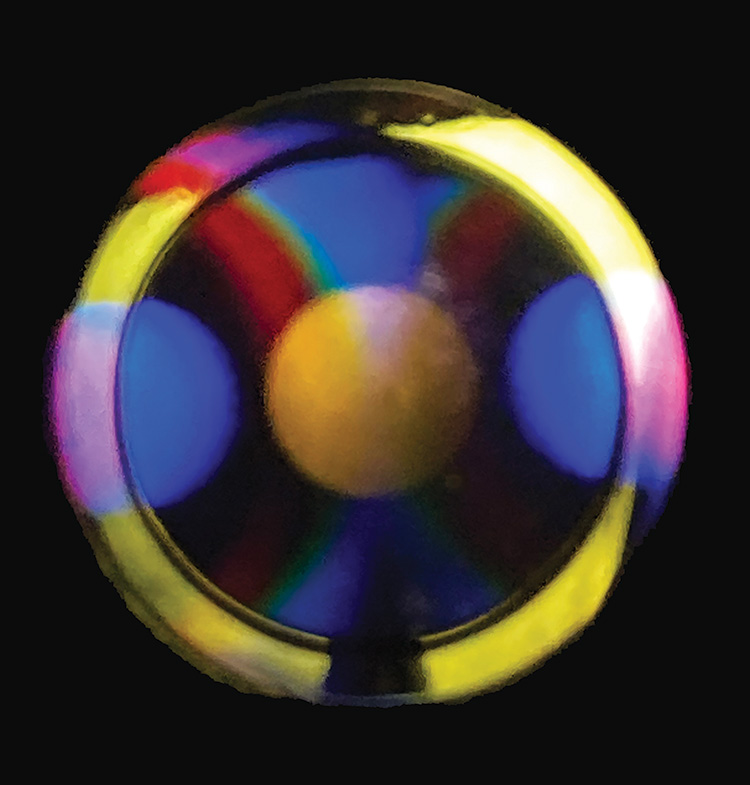
Transmission of diffuse light (from an RGB LED flashlight) through a cycloidal diffractive waveplate. The waveplate (provided by BEAM Co., Orlando, FL, USA) makes use of the Pancharatnam phase, where arbitrary variations may be imparted to polarized light.
—Image by Ph.D. student Xiulian Shan; edited by advisor Grover Swartzlander, Rochester Institute of Technology, NY, USA
HONORABLE MENTION
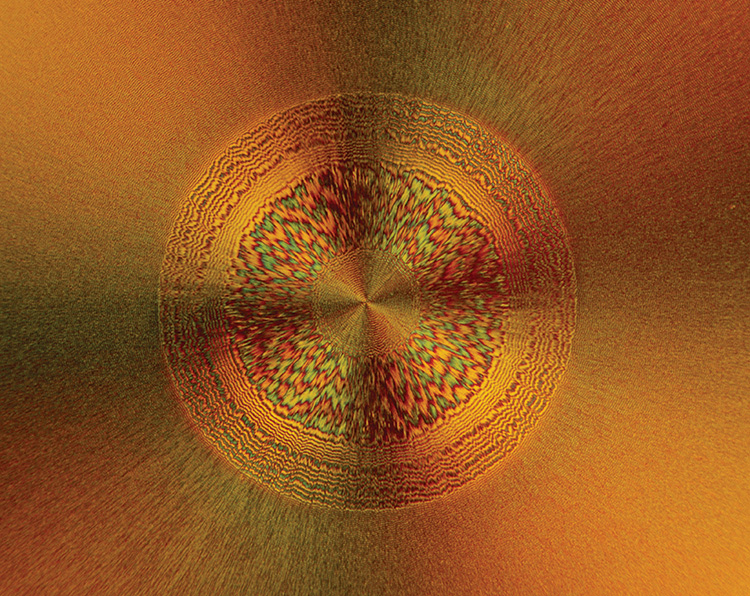
Recrystallized from a solution in vodka, vitamin C and stevia accreted into a stunning mandala, with many light-refracting and -diffracting layers helping to bring out visual details. Image captured with a camera sensor attached to a trinocular microscope, along with a polarizing filter and a retarder (clear plastic food wrap).
—Ivan A. Amato, South Orange, NJ, USA
HONORABLE MENTION
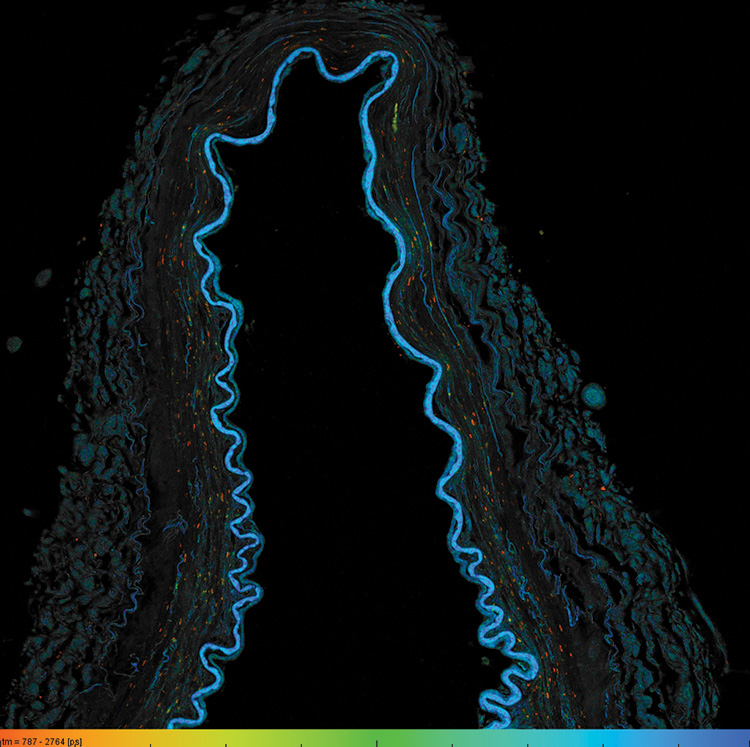
A two-photon microscopy fluorescence lifetime imaging representation of an artery cross-section, showcasing the rich structural details of the vascular wall. The distinct layers of the artery, including the tunica intima, media and externa, are vividly highlighted, with free-labeling techniques employed to capture fluorescence signals.
—Ayman Adel Fouad Abdelhakeem, Boston University, MA, USA
HONORABLE MENTION
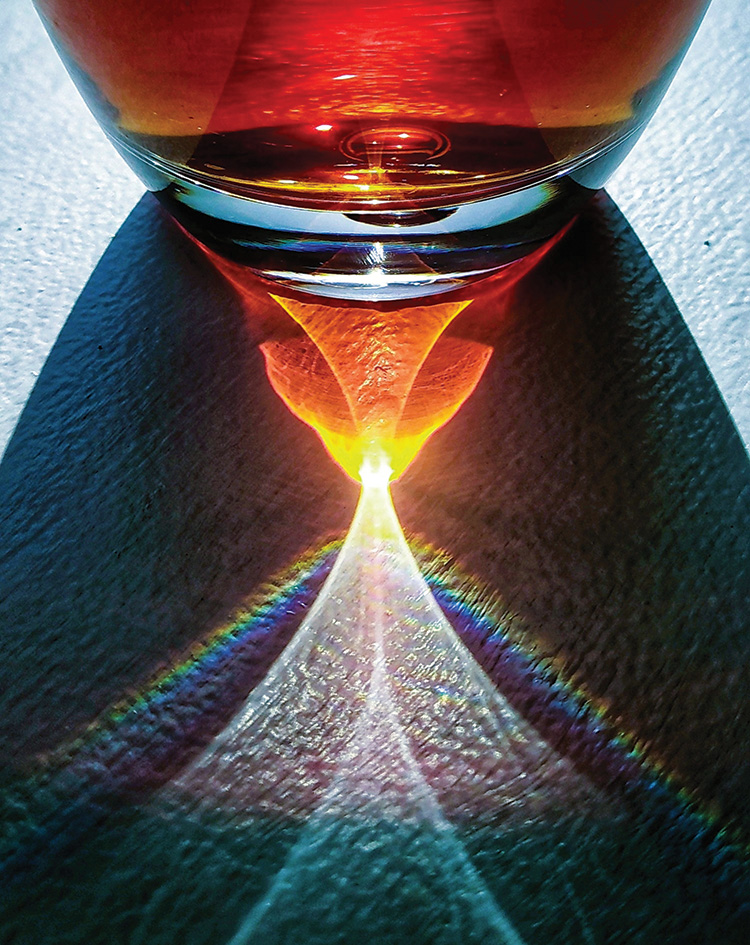
The curved surface of a glass of tea and the liquid within refract and focus sunlight into a bright, concentrated spot, which diffuses into an amber-tinted conical shape. The glass also acts as a prism, creating a miniature dispersion effect along the light pattern’s edges that results in a boomerang-like rainbow.
—Vahid Abbasian, Washington University in St. Louis, MO, USA
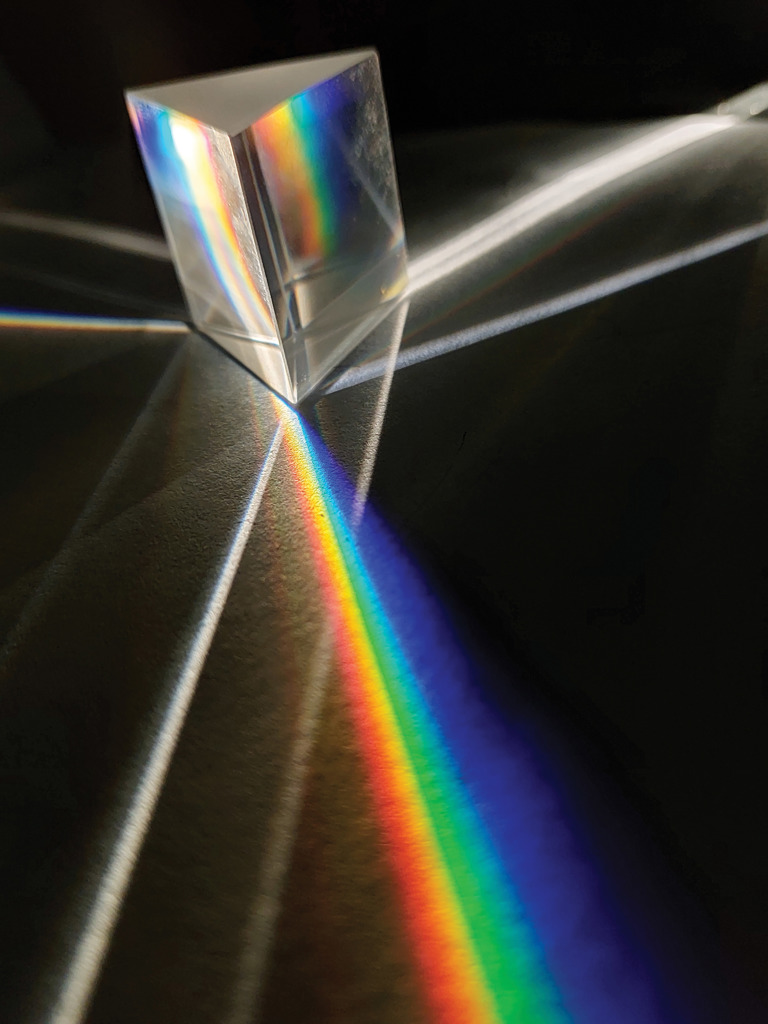
HONORABLE MENTION
Dispersion is a fundamental concept taught in most first-year physics courses. This photo was captured during an experiment in a first-year lab course. The white light beam passes through the transparent prism, and its different components (colors) travel at different speeds, causing the appearance of the spectrum.
—Yaryna Mamchur, University of Ottawa, Ottawa, Canada
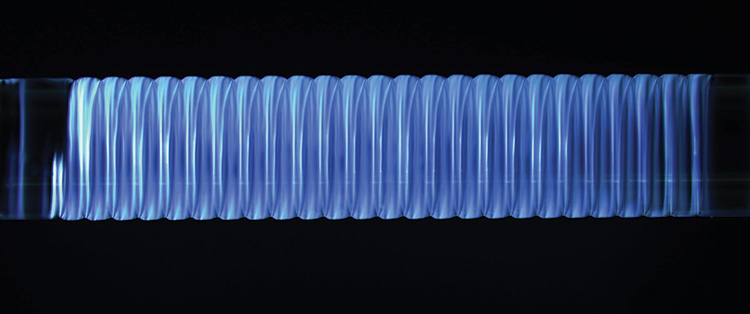
HONORABLE MENTION
A microscope image of an optical step-index fiber that has been processed with a CO2 laser. The laser focus rotates around the fiber and writes a track into the surface. The fiber feeding generates the helical structure. Light that is guided in the fiber cladding disrupts the total internal reflection to the surrounding medium.
—Steffen Böhme, Fraunhofer IOF, Jena, Germany
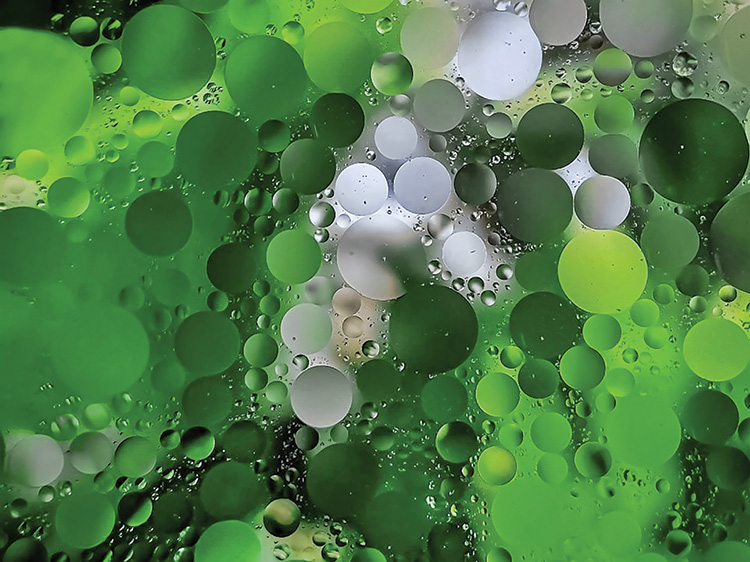
EDITORS' CHOICE
Oil droplets dispersed in water create a beautiful natural mosaic. Each droplet acts as a tiny lens, bending and shaping the light into unique patterns. A green digital screen placed beneath the setup provided the luminous background, allowing light to scatter, refract and transmit through the spherical surfaces.
—Sritam Sethy Kumar, M. Pharm Student, Balasore, Odisha, India
