

Image: Rocket Lab
Recent acquisitions in the photonics sector highlight a growing trend: US-based companies are increasingly turning to Europe to strengthen their capabilities in advanced optical and quantum technologies. Rocket Lab’s acquisition of Mynaric AG and the purchase of Polariton Technologies by Marvell Technology Inc., the two deals announced in April, underscore the strategic value of European innovation and the global consolidation underway in the optics and photonics industry.
The higher-profile of the two transactions involves Rocket Lab, which is acquiring Mynaric, a Germany-based developer of laser communication terminals for air, space and ground applications. Rocket Lab valued the deal at US$155.3 million, consisting of a nominal cash payment and 2,277,002 shares of Rocket Lab common stock. The acquisition also gives Rocket Lab its first European location, with Mynaric’s operations remaining in Munich.
Cross-border collaboration has long been a hallmark of optics and photonics research, but as technologies move closer to large-scale deployment, commercial and geopolitical considerations are becoming more prominent.
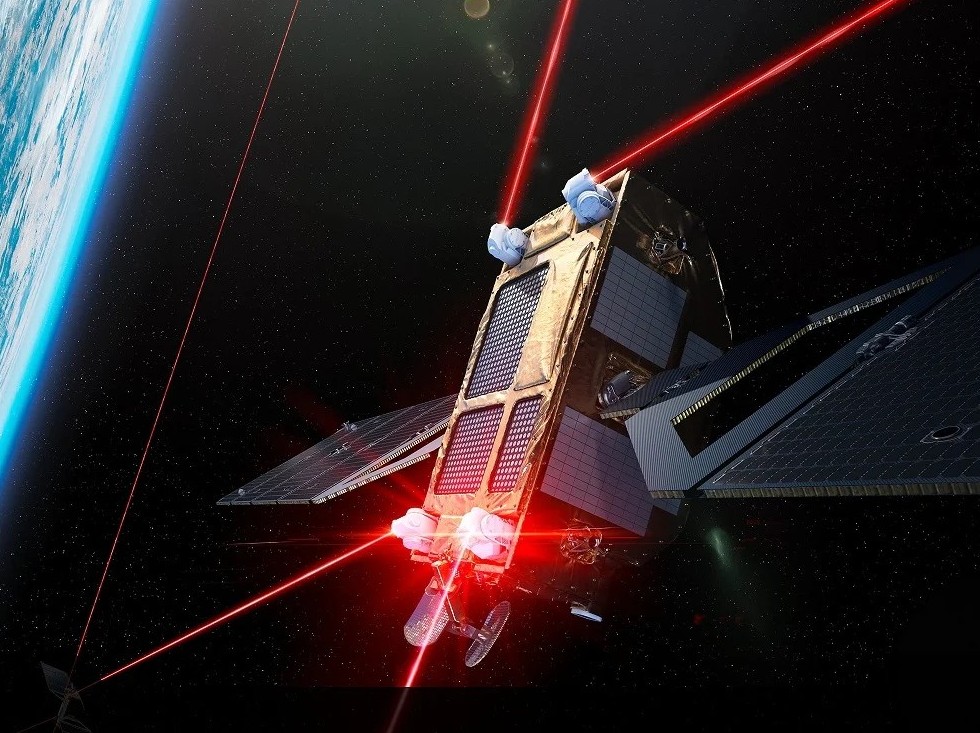
Mynaric has been a key player in the emerging market for optical inter-satellite links, providing technology that enables high-speed data transfer between satellites using laser beams instead of radio frequencies. The acquisition suggests Rocket Lab’s intent to bring in-house more of the key technologies for space-based communications infrastructure, particularly as demand grows for satellite constellations used in broadband connectivity, Earth observation and defense.
For Mynaric, the deal comes after a period of rapid expansion coupled with financial and operational pressures associated with scaling deep-tech manufacturing. Becoming part of Rocket Lab could provide the capital, production expertise and system-level integration needed to accelerate deployment of its laser communication technology. More broadly, the move reflects the increasing importance of optical communications in space, where laser links promise higher bandwidth, lower latency and improved security compared with traditional radio-frequency systems.
The second acquisition is also indicative of transatlantic momentum in photonics innovation. Polariton Technologies, a Swiss company, has established itself in the development of high-speed electro-optic modulators and plasmonic devices—key components for next-generation optical interconnects. These technologies are central to addressing the growing data demands of artificial intelligence, and cloud and high-performance computing systems. The financial terms of the transaction were not disclosed.
By acquiring Polariton, Marvell Technology Inc. gains access to cutting-edge expertise in compact, energy-efficient photonic components capable of operating at extremely high bandwidths. For Polariton, integration into a larger US-based organization may offer expanded pathways to commercialization, particularly in markets where scale, manufacturing capacity and proximity to major system integrators are critical.
Taken together, the two deals point to several broader dynamics shaping the photonics landscape. First, they highlight Europe’s continued strength in early-stage and deep-tech innovation, particularly in specialized areas such as quantum optics, laser communications and advanced materials. European startups and research-driven companies are pushing technical boundaries, supported by strong academic ecosystems and public funding mechanisms.
At the same time, US companies bring advantages in scaling, systems integration and access to large commercial and defense markets. Acquisitions such as these can be seen as combining European technological innovation with US industrial and financial resources. However, they also raise questions about the long-term balance of the global photonics ecosystem, including concerns about the migration of key technologies and expertise across regions.
Another aspect is the strategic importance of the field of photonics itself, which sits now at the core of several high-growth sectors, including quantum technologies, space systems and data infrastructure. As a result, companies and governments are paying closer attention to securing capabilities in these areas, whether through internal development, partnerships or acquisitions.
These developments also underscore the increasingly interconnected and competitive nature of the field. Cross-border collaboration has long been a hallmark of optics and photonics research, but as technologies move closer to large-scale deployment, commercial and geopolitical considerations are becoming more prominent.
Whether this trend continues will depend on multiple factors, including market conditions, regulatory environments and the pace of technological advancement. What is clear, however, is that the integration of photonics into critical systems, from satellite networks to data centers, is helping drive a new phase of industry evolution, one in which global partnerships and acquisitions are likely to remain a defining feature.
