

Light Touch
H.G. Wells’ Fascination with Light
The science-fiction and fantasy author’s expertise in microscopy and understanding of optics permeated much of his work.
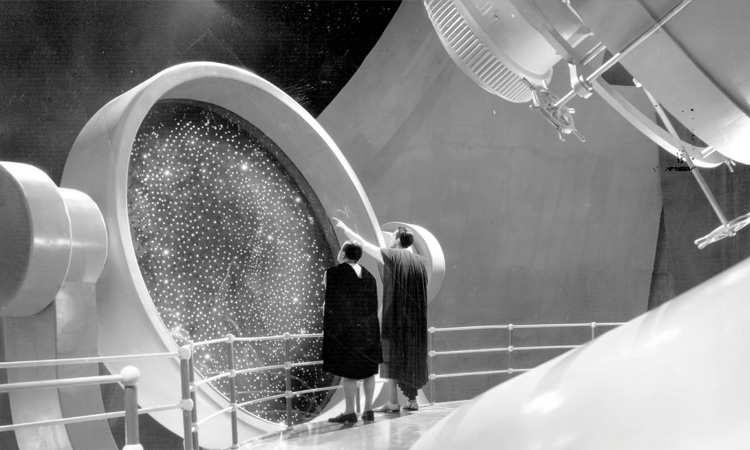 In a scene from the film “Things To Come,” based on a novel by H.G. Wells about a futuristic glass-based society and a rocket on the moon, two residents look at stars and planets on a large screen, circa 1936. [Henry Guttmann Collection / Hulton Archive / Getty Images]
I was recently rereading H.G. Wells’ first novel, The Time Machine, when I was struck by something I hadn’t noticed before. In the eleventh chapter, as the unnamed “Time Traveler” is going through the museum that he calls “The Palace of Green Porcelain,” he comes across the decomposing remains of old paper books and journals and reflects upon the waste of all that intellectual effort, now lost to the world. “At the time,” he muses, “I will confess that I thought chiefly of the Philosophical Transactions and my own seventeen papers upon physical optics.”
…Log in or become a member to view the full text of this article.
This article may be available for purchase via the search at Optica Publishing Group.
Optica Members get the full text of Optics & Photonics News, plus a variety of other member benefits.
